Affichage des articles dont le libellé est frais. Afficher tous les articles

jeudi 10 avril 2014

Lidl lance une formule citadine à Anvers

Lidl va ouvrir une nouvelle filiale au cœur de la ville d’Anvers, à la Frankrijklei plus précisément. Le discounter a opté pour une formule légèrement différente, adaptée à l’environnement urbain du point de vente.

Accent sur le frais

La nouvelle filiale anversoise de Lidl, qui ouvrira ses portes le 9 avril à la Frankrijklei, accordera une attention particulière aux produits frais, tels que les fruits et légumes et la viande, et proposera également du pain et des viennoiseries cuits sur place. « Les clients pourront y faire leur shopping tout en dégustant une tasse de Nespresso, une idée assez inattendue pour un discounter », explique le porte-parole Pieterjan Rynwalt.

L’aménagement du magasin a lui aussi été adapté au lieu d’implantation : tout y est plus moderne et plus épuré. Le magasin est également accessible via la Quellinstraat. Aussi Lidl a opté pour deux zones de caisses : « Il s’agit d’une première pour nous. »


Pas de places de parking

Le  magasin ne dispose pas d’un parking. Par contre un abri pour vélos a été prévu, et ce toujours en fonction de la clientèle citadine qui préfère faire ses achats dans un magasin de proximité, plutôt qu’un grand supermarché plus éloigné. « L’objectif est d’y attirer, non seulement les habitants du quartier, mais également les gens qui passent quotidiennement devant le magasin lorsqu’ils se rendent au travail ou lorsqu’ils font du shopping. »

Après avoir déjà ouvert des filiales à la Slachthuislaan, la Van de Weverstraat et la Lange Kievitstraat (près de la gare centrale), le magasin de la Frankrijklei est le quatrième point de vente anversois du discounter.

Amazon Dash, la nouvelle arme de Jeff Bezos dans la bataille des produits frais

amazon-dash
Le géant de l’e-commerce américain a dévoilé samedi un nouveau projet grand public, baptisé Amazon Dash, un terminal connecté en wi-fi qui permet de commander des produits du quotidien. Ce scanner fonctionne via l’application Amazon Fresh, uniquement disponible au Etats-Unis pour l’instant.
Muni de cette télécommande, l’utilisateur peut à la fois scanner très simplement les produits qu’il souhaite recevoir, ou indiquer à l’aide du micro intégré le nom de ceux qui lui manquent, comme l’indique cette démo : 
https://www.youtube.com/watch?v=JLOzF0Y4Mqw (la vidéo ne semble pas fonctionner c matin)

Ce nouveau device simplifie immanquablement la commande de produits frais. Mais on peut aussi penser que le grand public, qui dispose déjà de multiples appareils ( tablettes, smartphones, PC), n’est pas certain d’adopter un énième device, alors que les applications de commande web-to-store existent déjà. C’est le cas par exemple  d’Instacart à San Francisco, un application innovante de livraison de produits frais en moins d’une heure.
AmazonFreshLa firme de Jeff Bezos parie donc sur la livraison rapide de produits frais grand public, un marché que vise l’ e-retailer depuis un bon moment. La plateforme Amazon Fresh, qui livre des produits le jour-même pour un montant minimum de 35 dollars, a ouvert à San Francisco, à Seattle et à Los Angeles. Amazon Fresh entend concurrencer des géants du retail comme Walmart ou Tesco.
En France, c’est le service du drive qui permet de récupérer rapidement des produits frais. En 2013, on comptait ainsi 2 800 drives ouvert par les principales enseignes hypermarchés, Leclerc, Carrefour et Intermarché en tête.

Source: http://goo.gl/Vsjj2E

jeudi 13 mars 2014

“Carrefour optimise l’expérience du shopper”

Convivialité et efficacité, telles sont les armes grâce auxquelles les nouveaux concepts express et market entendent faire la différence. Les premiers résultats sont encourageants. Les franchisés indépendants apportent une contribution essentielle à la nouvelle stratégie. Quel est l’objectif final du distributeur? À la demande de StoreCheck Magazine, Luc Demez fait le point. Notre interlocuteur déborde d’enthousiasme et d’idées. L’homme, qui n’a pas l’air du genre à tenir en place, nous confirme que le magasin est son biotope favori.
Un nouvel élan
Les magasins market ont vécu des années mouvementées. Il y a d’abord eu la transition de GB à market, et plus récemment, la conversion des magasins Champion. “Il n’y a pas que l’enseigne qui a changé. C’est tout le concept qui a été revu, avec l’avènement d’un authentique marché du frais et une image plus moderne. Ces mesures étaient nécessaires, et les résultats le prouvent. Les supermarchés connaissent un nouvel élan et le chiffre d’affaires évolue positivement. Le fait que cette opération de renouvellement soit allée de pair avec la modernisation des hypermarchés a redoré le blason de Carrefour dans notre pays”, estime Luc Demez.
Seuls une dizaine de magasins doivent encore opérer la transition vers la bannière market, la plupart car ils sont en attente d’être relocalisés ou agrandis. “La quasi-totalité des 318 magasins franchisés, de nos 39 filiales et des 83 magasins Mestdagh ont donc déjà adopté le nouveau concept de magasin. Pour certains magasins, cette transformation remonte déjà à il y a cinq ans. Il n’est donc pas question de nous reposer sur nos lauriers. Le monde change, de nouveaux concurrents débarquent sur le marché, le commerce électronique a le vent en poupe… Tout cela nous a amenés à réfléchir à l’avenir de la formule market.”
C’est à la suite de cette réflexion que s’est ouvert le magasin pilote de Wetteren en novembre 2013. “Il ne faut pas s’attendre à une révolution puisque celle-ci a déjà eu lieu. Notre intention est plutôt de renforcer et de peaufiner le concept market, en nous appuyant sur ses nombreux atouts. Cela passera par l’introduction de nouveaux concepts, mais aussi de nouveaux assortiments, tels que les produits locaux ou les spécialités françaises sous la marque Reflets de France.”
Des idées à la pelle
Le nouveau concept market dégage une ambiance plus sereine, à laquelle contribue une palette de couleurs plus douce. L’éclairage LED est une nouveauté. “À Wetteren, nous avons été jusqu’à remplacer le revêtement de sol. Pour procéder à cette nécessaire intervention, nous avons dû fermer le magasin pendant deux semaines. Nous ne ferons pas ça partout…”
Carrefour imagine de nouveaux modes de présentation, au rayon fromages notamment. “Nous nous efforçons de recréer l’image du spécialiste, loin de la grosse machine industrielle. C’est le même principe à la boulangerie. Nous offrons davantage de confort et accordons plus de place et d’attention au frais. Nous y parvenons grâce à l’exploitation judicieuse des mètres carrés disponibles aux rayons alimentation, boissons et droguerie/cosmétique. Nous débordons vraiment d’idées. Le service SmartScan est quand même très innovant. Nous avons également conçu un meuble jouant sur l’engouement actuel pour les cocktails. Et le beau dans tout ça, c’est que nous pouvons utiliser les données client de Carrefour pour affiner l’offre par magasin. Dans l’un, nous mettons davantage l’accent sur le bio, dans l’autre, sur les produits locaux, ou sur l’assortiment ethnique. Cette stratégie personnalisée nous permet d’optimiser les performances de chaque point de vente.”
Un pur moment de plaisir
Les premiers résultats sont très encourageants, indique Luc Demez. “Les rayons frais enregistrent la plus forte progression: la poissonnerie, la boulangerie, les fruits et légumes… Mais on ne peut pas encore parler de perfection. 2014 verra la transformation d’une dizaine de supermarchés. Il est logique que nous commencions par nos propres filiales. Nous devons prouver que le concept marche. Nous espérons en valider les grands axes à la fin du premier semestre, avant de le présenter à nos franchisés comme le modèle du futur.”
“Je suis convaincu qu’il faut transformer les courses en pur moment de plaisir. Elles doivent être vécues comme une expérience positive et non comme une corvée. Nous concentrons nos efforts sur les rayons frais, par le biais de démonstrations, de dégustations et de conseils professionnels. C’est finalement le rôle du magasin. Tout ne doit pas tourner autour des prix bas. La qualité, un assortiment adapté, l’efficacité et la confiance sont tout aussi importants. Sans oublier la relation avec les clients et l’amabilité du personnel.”
Drives: différents scénarios possibles
Abordons pour terminer le potentiel de l’e-commerce pour les magasins franchisés. “Il est encore trop tôt pour l’envisager”, répond Luc Demez. “Nous testons d’abord le concept drive dans nos magasins intégrés. Il va de soi que le commerce électronique représente un défi. Mais il ne doit en aucun cas peser sur le service en magasin. Nous examinons différents scénarios. Certains commerçants proposent déjà la livraison à domicile à leurs clients. Nous pourrions aussi construire des drives indépendants pour desservir les magasins alentour. Tout reste possible. Rien ne dit que le drive connaîtra le même succès qu’en France. Quoi qu’il en soit, notre cœur de métier consistera toujours à offrir une expérience d’achat aussi agréable que possible dans nos magasins. Tant que nous y parvenons, les clients continueront de venir. Si, par contre, nous ne leur donnons pas suffisamment de bonnes raisons de franchir notre seuil, ils auront vite fait de dire ‘Mettez tout dans le coffre!’. Nous devons donc constamment améliorer l’expérience offerte au shopper dans nos magasins.” (svr)
Lisez l’interview intégral dans StoreCheck Magazine mars 2014.

mardi 4 mars 2014

Roundy’s Case Study

Roundy’s Supermarkets, Inc. Selects Hillphoenix for Its First CO2 Transcritical Refrigeration System

Under the leadership of Robert Mariano, Roundy’s is reinvigorating several beloved supermarket brands in Wisconsin, Minneapolis/St. Paul and the greater Chicago area. Its family of 160-plus stores includes the Pick ‘n Save, Copps, Rainbow, Mariano’s and Metro Market grocery banners.
Pick'n Save
Pick’n Save
Following the high-profile success of Mariano’s in greater Chicago, the company opened Roundy’s Pick ‘n Save, one of the nation’s greenest supermarkets on January 14, 2014 in Menomonee Falls, Wisconsin.
The Menomonee Falls Pick n’ Save is one of only a handful of stores in the United States utilizing CO2, an all-natural, green alternative to ozone-depleting HFC (hydrofluorocarbon) refrigerants. Roundy’s is using the new store to test an array of energy efficient and green technologies including Hillphoenix Cases and Clearvoyant™ LEDs, and a Micro Thermo Full Case Controller and Micro Thermo Transcritical Rack Controller designed by Parker Sporlan specifically for CO2 systems.
“We strive not only to give our customers a great shopping experience, but also to contribute to the communities in which we do business. Through our investment in these sustainable technologies we’re also able to do something good for our global community,” said Robert Mariano, chairman, president and chief executive officer of Roundy’s.
Green Refrigeration
Industry Leading Green Refrigeration
Pick ‘n Save Menomonee runs on Hillphoenix’s Advansor Transcritical booster system that entirely eliminates the use of HFCs, which was for decades the refrigerant of choice in the supermarket industry. HFCs contribute to global warming. One pound of leaked HFC refrigerant has more global warming potential than 4,000 pounds of carbon dioxide.
Increasingly, food retailers are moving toward more sustainable natural refrigerants including CO2, glycol and ammonia. Pick ‘n Save’s Advansor system is expected to yield a total carbon footprint reduction of 25,999,997 lbs. over 10 years — the equivalent of removing more than 430,000 cars from the road for per year.
In addition to the green appeal of CO2, it’s a much less expensive alternative to HFC refrigerants – around $1 per lb. compared to $8 per lb. So why haven’t more retailers made the switch? CO2 systems are still relatively new to supermarket applications, and some question the higher capital cost involved with CO2 systems. As companies like Roundy’s demonstrate the advantages of CO2, industry acceptance will no doubt increase.
Micro Thermo Transcritical Rack Controller
“The technology does cost more money, but the installation cost is lower than for similar systems we’re using elsewhere. Also, CO2 is cheaper on the operation side compared to glycol and other refrigerants,” said James Hyland, Roundy’s vp of investor and corporate communications.
Roundy’s selection of the Micro Thermo Case Controller and Micro Thermo Transcritical Rack Controller optimizes the Advansor system by ensuring precise control over case operation, leading to lower energy usage and reducing temperature shocks to food.
Beverage Case with Clearvoyant™ Lighting
“We will be conducting an energy analysis through all four seasons,” Hyland added. “We know what to expect from the system, and it appears the cost of the system balances out with comparable systems due to lower installation and operating costs.”

Hillphoenix Advansor Transcritical CO2 Booster System Advantages

- The Advansor Transcriical CO2 Booster system ustilizes CO2 as the only refrigerant covering both medium-temp and low-temp loads.
- CO2 has a high temperature heat of rejection, making it ideal for heat reclamation applications and efficient hot gas defrosting.
- CO2 systems operate under much higher pressures than conventional HFC-based systems. Many CO2 systems require steel piping throughout and carry a higher risk of pressure-related system breakdowns. The Advansor system eliminates those concerns by perfecting the use of pressure reducing valves so that everything inside of the store operates under lower pressure, as it would with an HFC-based system. Contractors can use copper piping and retailers can rest easy knowing that their Advansor system maintains pressures within a range normally found in traditional DX systems.
- Hillphoenix R&D capabilities ensure that CO2 technology is a viable option for every merchandising configuration. From walk-ins to custom specialty cases, Advansor technology is available across all Hillphoenix product lines.

Energy Saving Case Merchandising and Walk-Ins

In addition to the refrigeration system, the store is outfitted entirely with Hillphoenix cases and walk-ins. “In the past we have purchased our salad bar, floral and bakery cases from other manufacturers. For this store, we went with all Hillphoenix cases because of their expertise with this technology,” said Hyland.
And every case includes energy saving Hillphoenix Clearvoyant™ LED lights. The custom light rod design of Clearvoyant provides consistent and complete light distribution throughout the display fixture, eliminating dark spots and delivering 15 percent more lumens per watt than competitive systems.
New to the Roundy’s line-up of merchandisers, Pick ‘n Save installed Hillphoenix Narrow Reach-In Low-Temp Frozen Food and Ice Cream Merchandisers with PureView™ Doors. Their unique design ensures uniform case performance, lower average product temperatures, and increased merchandising visibility with optimum energy efficiency.
Low Temperature Cases with PureView™ Doors
“Our merchandisers like the cases because the bottom shelf is higher, so customers don’t need to bend down as much to reach products,” said Hyland. “Also, the shelves are solid so they’re easier to stock. They also like the handle and the look of the glass door.”
While many retailers have come to expect the same-old, same-old when it comes to walk-ins, Hillphoenix is redefining customer expectations with features including improved hinges, handles, seamless jam guards and LED lighting. Pick ‘n Save walk-ins also utilize environmentally-friendly 245fa blowing agent that offers industry leading insulating value, adhesion, strength, density and uniformity.

mercredi 19 février 2014

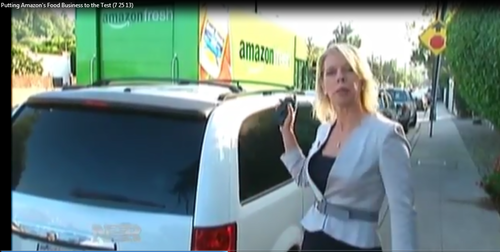
Amazon fresh Los Angeles : La TV teste et les concurrents en parlent !

Oui je vais encore vous parler d'Amazon... j'insiste peut être et m'en excuse mais pour plusieurs raisons. Intéressant reportage repèré sur youtube sur l'arrivée du service Epicerie Amazon Fresh à Los Angeles ... et testé montre en main par les journalistes locaux. Un reportage à voir sur link. 
Amazon-fresh-los-angeles-le-furet-du-retail-2.png
http://www.youtube.com/watch?v=Fc0JeW9v4Oo
Pourquoi j'insiste ... ? Parceque pour avancer il faut regarder ce que font les plus audacieux ... 
Yves Puget expert de la distribution française le dit dans son édito du magazine LSA ''spécial commerce américain" du 30 /01 : ''nous souffrons probablement d'un manque d'audace''. Analyse qui explique remarquablement que la distribution française est certes l'une des meilleures du monde .. la preuve elle vient d'inventer le Drive ... néanmoins elle à vécu sur ses convictions et nécessite des réactions. Les ''même pas peur... '' et '' qu'ils viennent... '' ne sont plus convaincants. Car l'histoire du commerce n'est pas finie, et n'a pas forcément commencé comme on veut bien nous le raconter en 1963 à Ste Geneviève des Bois.
Doug Stephens référence du commerce international considéré comme The Prophet Retail au Canada avoue : 
"nous avons tendance à mesurer le bien fondé des idées d'Amazon en nous basant sur le monde que nous connaissons aujourd'hui. Je ne pense pas que Jeff Bezos fonctionne de cette façon... je le soupçonne d'avoir probablement 10 ans d'avance... Donc nous prononcer sur l'efficacité de la stratégie d'Amazon c'est très difficile. Nous n'avons aucun référent et toute réflexion ou opinion sont conditionnées par la réalité(et notre culture NDLR) du marché actuel... donc biaisé. Avec Amazon il ne faut jamais dire jamais''. 
Amazon-fresh-los-angeles-le-furet-du-retail-4.png
Le reportage confirme que les américains n'aiment plus aller en magasin(70% des français avouent que les courses sont une corvée sources Ipsos 2013) et d'autre part ont une vie ''bien remplie''... un service comme Amazon Fresh correspond à l'état dans lequel est la société américaine ... active.
Et regardez la réaction du CEO de YUMMY.com, l'un des concurrent local B&Mortar d'Amazon Fresh, et livreur de produits frais ... en moins de 30 minutes (après commande en ligne) dont la réaction m'a également conforté dans mes convictions: le e-commerce va se nourrir des parties ''rentables'' du monde physique à qui il ne restera ... que le reste. 
Amazon-fresh-los-angeles-le-furet-du-retail-7.png
Ce concurrent avouant qu'Amazon ne ''devrait pas les tuer mais leur enlever les 10 ou 15% de business les plus profitables''. Car n'oublions pas que la commande ne concerne pas que les produits frais, mais également l'ensemble de l'offre SM alimentaire de proximité, Hygiène beauté, entretien, pet food, biscuiterie frapiche etc ... (Amazon = 15% de CA Procter & Gamble aux USA.... voir mon post #Amazon s'installe directement dans les entrepots #Procter & Gamble ... encore un tabou qui tombe! ) 
Et souvenez vous, 30 minutes c'était la promesse de Pizz Hut, créateur du concept de la livraison à domicile de pizzas ... en 1995.
Car le défi d'Amazon au travers de son service et de son offensive sur cette catégorie de produits pouvant être le plus profitable (cf mon post Amazon Fresh : Les analystes financiers prédisent une forte rentabilité. ) est de livrer les foyers AVANT leur départ au travail. Entre la douche et la sortie du garage.. Après c'est plus rentable (point de retrait, bad expérience, taux de retour important).. Sans cette promesse, Amazon n'y serait pas allé. 
Bingo pour le test de cette journaliste, le créneau 7 à 8 heures est respecté. Livraison à 7h21.... 
      
Amazon-fresh-los-angeles-le-furet-du-retail-3.png
Le deuxième concurrent Webvan lui à préféré être racheté par Amazon ... Mais finalement l'acquisition de ce pionnier local, ayant toujours son enseigne, ne fait que renforcer la crédibilité du leader du e-commerce US. 
Amazon-fresh-los-angeles-le-furet-du-retail-6.png
Et pendant que l'on doute où faisons semblant de ne pas y croire... Amazon avance .. innéluctablement, et pas rentable.. Jusqu'à quand ? Intéressant isn't it ?
Ce qu'il faut retenir c'est qu'à force de ''ne pas y croire'', Amazon aura testé son concept, déployé à San Franisco et Los Angeles, avant d'ouvrir 20 sites durant cette année 2014. Mais quand ils s'implanteront, on criera au loup... mais trop tard.

lundi 3 février 2014

Salad from a vending machine? Farmer's Fridge might convince you.

Farmer's Fridge /via
Fast food isn't usually healthy or environmentally friendly, but a new automated kiosk in Chicago is aiming to change that. Farmer's Fridge is like a vending machine, only it offers fresh salads, yogurt parfaits and veggie sticks.
Farmer's Fridge sources fruits and vegetables locally and organically as much as possible, something of a challenge during the winter in Chicago. The kiosk is stocked with fresh items each morning, and what isn't sold at the end of the day is donated to a soup kitchen. There's even a $1.00 discount on salads sold after 6:00 PM.
The produce is appealingly layered in clear plastic containers, which can be recycled with the rest of your number 1 plastics or returned to the kiosk for re-use. Founder Luke Saunders told Modern Farmer he hopes to one day offer an incentive program for recycling.
According to their website, the kiosk uses less than $10.00 of electricity per month and is built from reclaimed barn wood.
There are currently two Farmer's Fridge locations, one at the Garvey Food Court and one at the Lake Forest Tollway Oasis.

jeudi 30 janvier 2014

Le point sur le marché du frais en Belgique (info déjà ancienne)

Deux fois par an, cette rubrique est l'occasion de faire le point sur l'évolution des canaux de distribution des aliments frais. Voici l'essentiel de nos conclusions pour l'année 2012.

Le hard discount a parfaitement digéré la mauvaise passe de  2009 car depuis, il ne cesse de progresser à nouveau. L'an dernier, il a même enregistré la plus belle progression. Le marché de proximité se porte bien lui aussi, puisque sa progression est continue sur les quatre dernières années. Par contre, si la DIS 1 reste de loin le canal de distribution le plus important, elle perd du terrain dans toutes les catégories de frais. La situation est pire encore pour les magasins spécialisés et l'open market, les ‘grands battus’. La DIS 1 se montre plus solide à Bruxelles et en Wallonie qu'en Flandre. Le hard discount attire désormais davantage de ménages aux revenus plus confortables. 
 
Grand vainqueur : le hard discount
  1. Après une pénible année 2009, le hard discount progresse à nouveau depuis 2011. L'année 2012 fut d'ailleurs particulièrement fructueuse puisque ce canal est le grand vainqueur de l'année écoulée : avec des parts de marché en hausse de 1,2%, soit 16,1% de l'ensemble, il se rapproche du n°2, le supermarché de proximité.  
Pourtant, les parts de marché de ce dernier sont également en hausse. La progression est continue depuis 2008 mais a fléchi l'an dernier : + 0.3% seulement, pour un total de 16,3%.  S'il y a progression d'un côté, il y a forcément recul de l'autre. Depuis 2008, la DIS 1 et les magasins spécialisés ont enregistré des moins-values de respectivement 0,9 et 2,1%. L'open market ne se porte pas très bien lui non plus qui a vu ses parts de marché se contracter de 0,7%, en dessous des 3%. Le leader absolu du marché du frais reste cependant la DIS 1 avec 46,3% de parts de marché. 
Le groupe des ‘autres canaux’ – notamment : Bioplanet, les petites superettes ne possédant que 2 caisses maximum et la vente directe – forment un canal de distribution dont les parts de marché oscillent entre 5 et 6%.

La DIS 1 reste leader dans toutes les catégories de frais
Dans toutes les catégories de frais, la DIS 1 a les plus grosses parts de marché, allant de 39% pour les viandes à 53% pour les produits laitiers. Outre les produits laitiers, les œufs sont une catégorie importante pour les supermarchés en général et la DIS 1 en particulier. Pour ce qui concerne les légumes et les fruits, la DIS 1 est au-dessus de la moyenne avec des parts de marché de respectivement 49 et 48%. Elle est par contre relativement sous-représentée dans les catégories pommes de terre, poissons et viandes. Quand au hard discount, il ne détient que 9% de parts de marché dans les catégories viande fraîche, volaille et gibier même si  celles-ci sont en hausse.  
Dans ces catégories - viande fraîche, volaille et gibier - ce sont bien entendu les magasins spécialisés qui se taillent la part du lion : 27% de parts marché. Mais attention, elles sont sous pression.
L'open market est un canal de distribution relativement important pour les fruits, le poisson, les mollusques et crustacés. Enfin, notons pour le canal ‘autres’, des parts de marché de 11% pour les pommes de terre. Il s'agit essentiellement de ventes à la ferme.

La DIS 1 plus solide à Bruxelles et en Wallonie
La DIS 1 a de plus grandes parts de marché à Bruxelles et en Wallonie qu'en Flandre : respectivement 64, 52 et 40%. C'est en Wallonie que le leadership de la DIS 1 semble le plus sous pression dans la mesure où elle a perdu l'an dernier de nombreuses parts de marché auprès des revenus les plus faibles, des familles avec enfants et des pensionnés aux revenus limités. Par contre, le hard discount a gagné des parts de marché dans tous les groupes de population, à l'exception des célibataires de moins de 40 ans. On note encore qu'à côté des bas revenus, les familles avec enfants aux revenus plus confortables se rendent plus volontiers dans le hard discount. En cause : des gammes de produits de meilleure qualité. Leurs dépenses dans ce canal ont donc fortement augmenté.
Les magasins spécialisés sont un peu plus fringants en Flandre (p.d.m. de 15%) alors qu'avec des parts de marché de 10 et 9%, leur situation est moins facile à Bruxelles et en Wallonie. De la même manière, les supermarchés de proximité, le hard discount, l'open market et la vente directe détiennent davantage de parts de marché en Flandre que dans le reste du pays.
Les jeunes célibataires (- de 40 ans) choisissent plus volontiers la DIS 1 pour leurs achats (57% de parts de marché). Les familles avec enfants aux revenus limités fréquentent relativement plus souvent le hard discount dont les parts de marché sont de 23% auprès de ce groupe de population.
Les familles à un seul revenu optent plus volontiers pour les magasins spécialisés (15%). Les pensionnés aux revenus confortables sont ‘fans’ de l'open market (6%). Ceux dont les revenus sont plus limités font confiance aux supermarchés de proximité (20%). 

Source: Gondola (http://goo.gl/slWYdk)

mardi 28 janvier 2014

Vers une nouvelle génération de produits italiens en GMS

La société Fou d’Italie vient de signer un accord pour importer en France une gamme de produits frais italiens haut-de-gamme qui appartient au distributeur italien Finiper.

Des pâtes fraiches farcies, une large gamme de charcuteries italiennes et des produits laitiers. L’importateur Fou d’Italie, habitué à livrer la restauration hors domicile, vient de signer un accord pour pour pouvoir importer sur le marché français cette gamme de 140 produits regroupés sous le sceau « Freschi d’Italia ».


Cette marque a été développée en 2011 par Finiper, distributeur italien. Il crée alors une MDD premium associée au terroir, « une sorte de Reflets de France » explqiue Emmanuel Guth, PDG de la société d’importation. Lui a l’idée de faire voyager cette MDD qualitative « dont la particularité est de sélectionner des produits artisanaux ou industriels premium » note le PDG.


Créer un repère qualitatif  pour les produits italiens
Cette gamme, entièrement dédiée au libre-service, offre des produits rares pour la grande distribution française, tels qu’un jambon sec San Daniele avec 26 mois d’affinage ou encore un Parmesan avec 30 mois d’affinage. « L’Italie est la deuxième origine la plus représentée en rayon en France mais il est difficile pour les clients de savoir à quelle qualité ces produits correspondent. Avec Freschi d’Italia, on souhaite créer un repère » explique Emmanuel Guth.

L’offre a déjà séduit le marché suisse (Coop) et allemand (Real).

Source: LSA-Conso (http://goo.gl/HFJ9f4)

mercredi 22 janvier 2014

Healthy Helpings: Is fresh produce always better than frozen?

As we descend further into the season of snow and ice, many of us dream of the beautiful fresh fruits and vegetables so plentiful -- and less expensive -- just a few months ago.
While it is certainly true that picking a fresh fruit or vegetable from your own garden plot is the best nutrient-wise, how do the fruit and vegetable offerings we have to select from now compare?
Do they have the same quality and quantity of vitamin and mineral content as the grocery produce or frozen foods?
While it might be a surprise to many, the fruits and vegetables in the stores now might or might not be comparable nutrient-wise to the freshly-picked tomato or green beans from your garden last summer. How the food is handled makes a huge difference.
Three points to consider when choosing and using produce: the time from ground to table; produce storage conditions; and how the food is cooked.
The time from picking to eating is critical because once the produce is picked, the clock starts ticking in regard to the loss of nutrients from that product. That means that the best nutrient value is found in produce picked as close to the time of eating as possible.
For those who don't have a garden, try buying produce from a farmers market. Get to know the vendors and ask when the produce was picked. You can ask at the grocery stores about their produce -- many are starting to use local producers, but they might not know when their produce has been picked.
Using frozen produce is another great option. Groceries are able to provide a wide range of frozen vegetables and fruits year around. The frozen produce is almost always fresher than the fresh produce for those without a garden because of the speed at which the produce companies are able to freeze the food. Green beans can be from field to frozen in hours, which helps to retain much more of their vitamin content.
Once you pick or buy a fresh fruit or vegetable, be kind to it. If it requires refrigeration, get it in your crisper as soon as possible. Proper storage of fruits and vegetables is very important to maintaining its nutrient value and food safety. Vitamin C content, as an example, can be lessened with exposure to heat and light. Vitamin B6 also lessens with heat exposure.
Lastly, how you cook a food will affect the vitamin and mineral content of that food. You can pick the very best, freshest produce and ruin the nutrient content in the cooking process. Use as little heat and water as you can to get the food cooked. Less water will limit the amount of nutrients -- including potassium, B vitamins and Vitamin C -- that will leach out into the cooking water.
Steaming or microwaving foods requires much less heat exposure and less water use, so nutrient value is better preserved.
Cathie Brookhart is a clinical/outpatient dietitian Gettysburg Hospital. Healthy Helpings is a column written by nutritionists in York and Adams counties.

mercredi 8 janvier 2014

Fresh: The Fat of the Land

It is sometimes the case that our intuitive nature knows—long before solid proof arrives—when a good thing is, indeed, good. So it goes with farmers’ markets. This once quiet, now prolific movement (started for reasons that range from the political, to the sociological, to individual and community health, to economics) wouldn’t have caught on if the food wasn’t good. Ideology rarely trumps flavor.
Perhaps it was a stroke of luck, guided by the collective unconscious of the ancestors who ate before us, but it’s my belief farmers’ markets have been so wildly successful because they offer something no other sector of the food supply chain has accomplished: regular access to ultra-fresh foods. In doing so, markets have bolstered local economies, created community, preserved farmland, provided a platform for education. Yet, without incomparably good food, these ritual gatherings would not hold the magnetic attraction that draws us to them each week.
We have known this from the beginning. The first time you went to a farmers’ market and took home a bundle of glowing vegetables, you knew you’d be back.Fresh food, especially vegetables and fruits, speaks to us. We taste its authenticity first, then come to feel it in the deep compulsion of wanting what is best for us.
Though I have learned (shopping at markets and growing some of my own food) to value fresh vegetables as highly as any other currency through which I barter for survival, until recently, I thought of this preference as personal: a matter of taste, a symbol of privilege, perhaps. I could sense fresh meant better—more nutritious, even—but my hunch felt unquantifiable.
Lucky for us, there are sturdier feet to stand on than hunches. I recently got my hands on a copy of Jo Robinson’s newest book, Eating on the Wild Side. This meticulously researched work draws on hundreds of studies from various disciplines, summarizing how (to the best of our current knowledge) we can get the most nutritional benefit from common fruits and vegetables. Robinson’s wise tactic is not to insinuate that we incorporate a host of difficult to access (or unappealing to eat) super-foods, but to unlock the health potential of those we already cook with.
As I read through this book, it became clear that many vegetables touted for their nutritional prowess lose much of their potency mere days after being harvested. To get broccoli’s maximum nutritional benefits, it must be eaten within 2-3 days of harvest. In ten days of optimal storage conditions (mimicking best-case scenarios of commercial harvest and transport), one study found that broccoli lost 50-80% of its super-food powers.
Turns out, most leafy vegetables and shoots are significantly better for you when eaten as soon after harvest as possible. The harvested parts of these plants continue respiring (a plant’s version of processing energy) after harvesting, using up the phytonutrients that would have otherwise been replenished if they were still connected to the whole plant. As vegetables sit in transit and on display, their constant respiring also increases their bitter flavors. Fresh vegetables not only contain impeccable nutrients, they are more palatable to those who are sensitive to strong flavors (and tend to avoid eating the leafy green end of the vegetable spectrum).
While the industrial food chain continues to perform miracles of efficiency and abundance, it does so at the cost of nutritional potency. What we’ve known all this time as eaters of farmers’ market food is that fresh makes the difference. It makes our healthy vegetables healthier and trains our taste buds to know the difference between good enough and better. Jo Robinson has gathered into one easy read a plethora of reasons why this is so, for those eager to know more.

jeudi 12 décembre 2013

Fresh pre -cut analysis of food packaging

Fresh pre- cut foods market development
Currently has grown to $ 80 billion market size of U.S. fresh food industry , involving $ 12.5 billion in a processed food (including cleaning , carry MA packaging of fruits and vegetables and good modulation salad products after cutting ) industry infull swing. Fresh pre- cut fruits and vegetables processing to provide people with the consumption of convenience and benefits to consumers of fruits and vegetables healthy food service , is one of the service means plastic packaging design easier occupied consumer market. Fresh pre- cut vegetables is not easy to focus most young vegetables such as lettuce, broccoli , cauliflower , etc.
In 1985 , fresh pre -cut fruits and vegetables market sales is zero, but the 2004 has developed into a market size of $ 5 billion . Even in the food industry has increased $ 7.5 billion , an increase of speed is quite fast. Whether consumers are spending in their own homes , or when they go out of the consumer , including a pre- cut fruits and vegetables, salad dishes catering industry is becoming one of the larger demand . 2003 Display of consumption growth of 37%. According to the survey of West Restaurant Association , has become the number one salad dishes eaten dinner orders outside the most frequent .
Pre- cut fresh fruit market sales amount in 2004 was $ 200 million , however .However , according clear plastic packaging to forecasts , by 2008 will reach 20 billion U.S. dollars in large scale . Fresh pre- cut fruits and vegetables due to the higher moisture content and sugar content, so even low-temperature storage is indispensable for its improvement store shelves .
Including tomatoes included, pre -cut fresh fruit water loss more, one in order to ensure convenience, is indispensable to prevent moisture loss countermeasures . Fortunately, on the pre- cut vegetables to date knowledge and operating experience to master , can apply to the pre- cut fresh fruit, for better management . In addition to the plastic packaging box high pH of cucumber, fresh pre- cut fruits and safety of scaffolding and other low temperature is not so important issue , ” provide a good food experience to consumers ” will be an important key to the development of the cause .
It is understood that before , also a one-time processing and packaging , circulation leads to corruption as food loss rate as high as 30%. Retail sales lettuce , tomatoes and apples and other fruits and vegetables accounted for 70 %. Recent salad with tomatoes roughly cut vegetables , fried croutons , nuts or dried fruit packaging made ??of a mixture of the other . After the loss of moisture from the vegetables due to decline in quality control, these pre- cut vegetables with cheese and cold meat on the shelves of concentrated mixtures , after processing it into a salad. Pre- cut vegetables gas conditions change packagin g (MA packaging ) in combination with the application of cold chain after its preservation time , although it will vary because of the different varieties of vegetables , but generally can be extended to 10-20 days, usually close to 10 days or 10 these days.
Now the fresh pre -cut vegetables and fruit products manufacturing has put before the dishes for fast food or department store sales counters and other prepared dishes or as a salad staple centralized processing to the consumer before the purchase of the salad counter with protein foods such as meat and cheese group with a good future to buy , promote broader consumer demand. Now increasing food manufacturers are more interested in the development and promotion of consumption consistent with market demand and auxiliary dish , to develop more high-performance pre- cut vegetables , resulting in a pre -cut fruits and vegetables to further develop the market.
Rapidly growing food and beverage industry can consume about 60 percent of the fresh pre -cut fruits and vegetables production.
All of its products have been washed, slitting and packaging process, including lettuce and other leafy greens, tomatoes and onions , can be used for processing into secondary or main dish salads and other dishes .
According to the survey , about 20 percent of Americans dining is carried in the car . Convenience stores (CVS) sales of high value-added pre -cut fresh fruit and vegetable products accounted for a large proportion . At 90,000 stores and CVS, pre -cut fresh food is positioned at the location ” food for immediate consumption ” on and is exploring a variety of new packaging technologies. About 10 % of people within two weeks CVS purchase materials, home processed into food for human consumption.
In order to facilitate the trip home after purchase , pre- cut fresh fruit and vegetable packaging size and shape of the material is also very important. Vending machines generally sell beverages, snack foods , cookies, crackers and pastries and other sweets can be stored at room temperature and the flow of food . But like infant food, popcorn , celery, pre- cut broccoli and salad and other portable pre -cut fresh food has also been noticed. As well as whole fruits like apples and bananas marketed directly edible food , although it has some difficulty, but the study is being developed using the easy to operate pre- cut produce is looking forward to soon be listed consumer supply .
MA packaging is the mainstream of development pre- cut fresh food packaging General pre -cut fresh food after preliminary processing, in order to extend the quality of hold time , the need to implement MA package , so you can save and circulate at low temperatures. MA package is called the concentration of oxygen in the pre- packaged fresh -cut products around , and gases such as carbon dioxide and water vapor can be adjusted and controlled. By adjusting these environmental factors, the quality of the product holding time can be extended to 10 times .
MA packaging is formed artificially high carbon dioxide atmosphere hypoxic conditions , the pre- cut fruits and vegetables inhibited respiration and quality changes . But if it is too extreme low oxygen conditions , smell and quality change will occur, and therefore must try to avoid such a situation . That is, in order to maintain the quality of pre -cut products must be adjusted to control the environmental conditions suitable gas . For this purpose, a suitable gas -permeable packaging material to accommodate different requirements for respiratory rate of fruits and vegetables is also an essential thing.
Recently , with the development of plastic packaging materials research and production of plastic film oxygen permeability can already reached 300-400CC/100m2 / day , equivalent to 4000-5000CC/m2 / day. Playing breathable microporous film degree 1000CC/100m2 day , the equivalent of 16,000 CC/m2 / days. The future will be to develop a homogeneous film of its oxygen permeability can reach 233,00 CC/m2 / day .
Now pre -cut fresh products with flexible packaging film market size of about $ 300 million .
Water ( Fog ) steam plastic trays treatment: It is important that , in order to more clearly see the contents of the quality of the package , the flexible packaging films waterproofed (fog ) steam treatment .
Has recently adopted the waterproof ( mist ) into the steam agent group method of packaging film waterproof ( fog ) steam treatment .
Easy opening : the bag consumer convenience and resealing high expectations .Glass containers or pallets package is pre -cut fresh products are generally packaged form , the top seal parts need higher gas permeability.
Upright bags need to be laser processed to achieve easy opening . Dried fruit used - like packaging has recently been pre- cut fruits , salads and pre- cut vegetables and other products use . In this case the need for a film suitable for packaging MA high gas permeability. Now the market has a fastener while a resealable bag , convenience is good, but there is a high production cost 1-3 cents .
Small component package : fast food as a small component of the package or the right amount of people to use a small package, the almost complete absence in the pre- cut fresh products in use . Although small package packaging costs are high, but considering the loss of food waste and waste issues, from the overall cost of the packaging to see the big or small package suitable ( total cost is relatively small ) .
Semi-rigid ( glass vac tray containers or pallets ) Packing: when to buy a home in a fast-food consumption and food consumption in the home , the ideal is to use a semi-rigid packaging materials. In terms of commodity charm , especially for simple and easy to use pre -cut products, semi-rigid packaging is the direction of future development , the market will gradually grow.
Packaging plastic box Technology : Research is under way to improve the packaging is not limited to a gas -permeable , but also mobile features packaging design steam , ethylene , inhibit the growth and reproduction of microorganisms , and control many aspects of the fragrance precision techniques . Which is a practical technique is to add the calcium carbonate inplastic packaging the packaging film in order to control the gas permeability of the object , one has now been normalized artificially active packaging is known to maintain freshness (Fresh Hold) technology. In addition , depending on the temperature and gas concentration to adjust the permeability clamshell packaging of oxygen and carbon dioxide Intelimer technology micropores technology - the use of P + (P-Plus) thin films by pulsed electrical discharge .
Recently, the use of laser perforation technology to control gas mobility technologies , antimicrobial packaging - use antibacterial ingredients propenyl isobutyl ester horseradish contains thiamine to inhibit microbial proliferation packaging technology as well as moisture absorption and release and multiphase packaging - the gas absorption and release material is added to the packaging film and packaging sheet , the gas composition was controlled packaging technology - absorption and emission control technology components .
Prospects for the development and application of technology
About 20 years ago, no one knew the pre- cut fresh food market retail and consumer products to meet the higher demands of high quality and convenience , the food industry is currently a very important research topic. Its ultimate objective is to study the pre- cut deal with products manufactured in a variety of factors and when its circulation fall by the quality control to achieve high quality of the various technologies. Future research and development will exceed the pre- cut fresh convenience products category , in order to convert it into a main course dish from the secondary , further research to explore the development of suitable packaging technology .